
Horticulture Training for Persons with Disabilities

Cultivating Skills, Growth, and Independence

Farming has traditionally been the mainstay of our economy, among them the horticulture sector provides an environment-friendly source of income that is simple and profitable. It is in this that the Abhivruddhi Foundation have implanted special horticulture training to Persons with Disability(PWD). These projects are aimed at teaching you practical skills in agriculture as well as how to break out from poverty, give back to the community and build a dignified future for yourself.
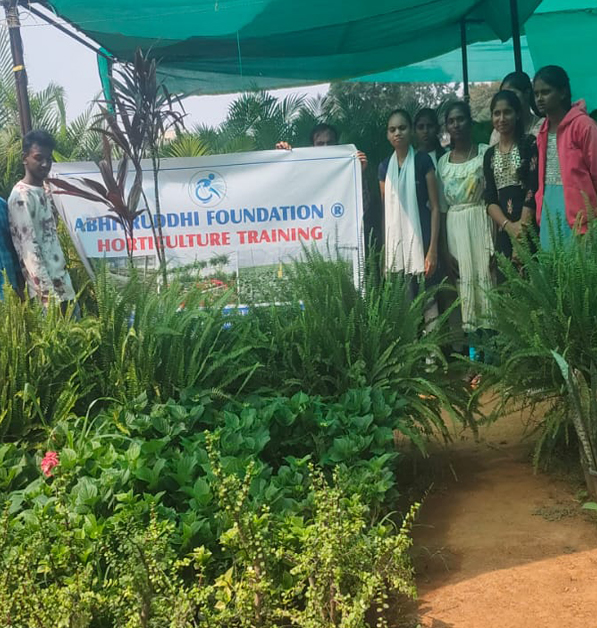
Abhivruddhi_foundation_horticulture1

Why Horticulture for PWD?

Horticulture (including fruits, vegetables, flowers and medicinal plants) offers some potentially important benefits to PWD. Not Like many labor-intensive industries, horticulture provides jobs that can be accommodated to various ability levels. It’s an approach that allows one to work independently, at ones own tempo and pace  while also generating real impact with real-time results that significantly enhance the quality of life. Horticulture also helps health, patience and connects us to nature, which in turn research has proven to be good for mental and emotional well being. For PWD, it is not just a career route – but a therapeutic and confidence-boosting journey.

Structured Training Programs

Structured horticulture training modules have been the output of the Abhivruddhi Foundation, custom made to suit individual candidate requirements. The curriculum covers:

  • Cultural practices: the basics – soil preparation, planting, and care.
  • Cropping system management – pest control, organic cultivation, and irrigation.
  • It also takes care of propagation and baby plant handling to reach them ready for sale.
  • Post-harvesting management – sorting, packing and selling of the production.

Applicants participate in applied training and hands-on fieldwork which means they are prepared for more than just theory. Through working at demonstration plots and in community gardens, trainees learn to have more confidence to do these operations independently.

Empowering Through Organic Practices

The college prioritises organic farming where it trains farmers how to reduce the use of chemicals and practise crop production sustainably. This not only results in healthier crops but also opens up niche market opportunities within the growing organic food market. A number of students have been trained in the programme and established their own small organic farms to produce vegetables, fruits or ornamental plants for the local markets.

Creating Pathways to Livelihood

Goal of horticulture training. The final objective is to create self-employment options. Participants are handheld by Abhivruddhi Foundation in the following manner:-

  • Freelance training – Assisting new poultry trainees in starting up their own kitchen gardens, nurseries or smallholder farms.
  • Work – Arranging internships in agriculture companies, nurseries and landscaping sites, and community farms.
  • Market linkages – Link PWD farmers to buyers, cooperatives, and local vendors in order to facilitate a direct market access of their produce.
  • It’s a means for these individuals to not just earn money, but provide sustainable financial stability for themselves and their loved ones.

Farmily: Beyond the Farm – Cultivating Confidence and Community

Horticulture training isn’t only about crops it’s also about personal development and belonging. Soil, plants and nature help the trainees learn patience, responsibility and teamwork. For a large number of participants, horticulture has led to more self-esteem and decreased stress. The community gardens that are established as part of the training further connect people and support social interaction, decreasing the isolation experienced by many PWD. The program helps both participants and the community as a whole by turning open spaces into productive green space.

Success Stories and Impact

The horticulture program has several success stories. Trainees who previously found it difficult to secure a job are now earning on their own, working as vegetable, flower or sapling vendors in local markets. Others have now established small companies offering landscaping and gardening services and are using their expertise to earn a living. Every story illustrates the life-changing potential of skills-based training and demonstrates that PWD can lead successful and productive lives, when they are offered with opportunities as well as support.

Towards a Sustainable Future

At Abhivruddhi Foundation, we believe empowerment goes beyond aid it is about dignity, skills, and opportunities for all. Through training, mentorship, and sustainable livelihoods, we enable Persons with Disabilities, men, and women to step into independence with confidence. With initiatives like horticulture and other innovative models, we are creating not just jobs, but pathways to self-reliance and hope.